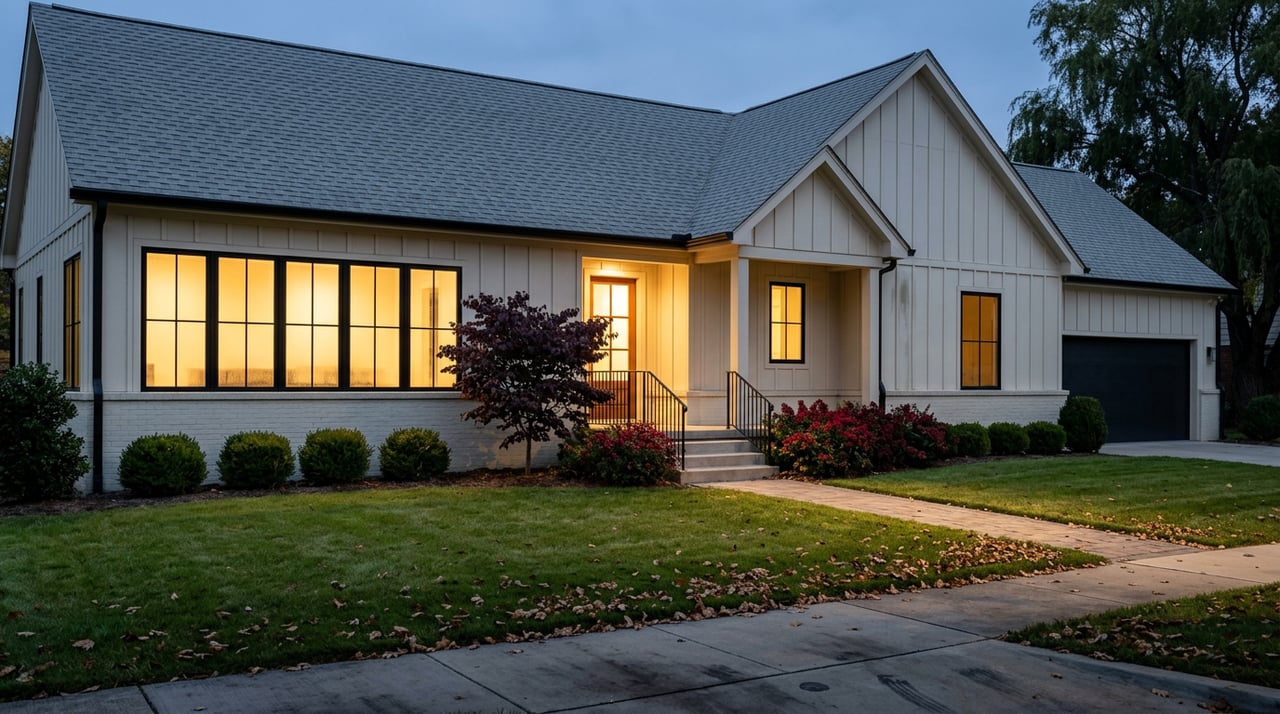
Every other item on the McLean Community Center's calendar has a producer. Artfest has a jury. McLean Day has a stage, a beer garden, and a lineup of more than 100 exhibitors that MCC staff spend months booking. The Old Firehouse Block Party has a set list. Light Up McLean has none of that. MCC opens a registration window, and then it steps back. What happens next, string by string, on driveways and porches across the Dranesville tax district, is written entirely by homeowners, and judged entirely by whichever neighbors bother to drive by and vote.
That structure is the whole story. Most of what shows up on a McLean community calendar in the fall is professionally produced entertainment you attend. Light Up McLean is the one thing residents produce themselves, for an audience of each other, and it happens to run during the only stretch of the year McLean's public calendar otherwise goes quiet.
A Contest With No Jury
McLean Community Center's fall program guide, published in late July, lists this year's window plainly: registration for house decorators closes Dec. 11, and the display and voting period runs Dec. 21, 2026 through Jan. 3, 2027. Compare that to last season, when registration closed Dec. 12 and the contest ran Dec. 22 through Jan. 3. The dates shift by a day here and there, but the shape holds steady year over year, which tells you this isn't a program MCC is still figuring out. It's a fixture.
What makes it unusual is who decides the winner. MCC doesn't send a panel of judges door to door. There's no rubric published for lighting density or theme cohesion. The center's own materials describe the mechanism simply: your neighbors vote for the winners. That's a meaningfully different model from Artfest, which is a juried show pulling in more than 30 visual artists from across the Mid-Atlantic and selected by people with credentials in visual art. Light Up McLean has no credentialed anyone. It has whoever is out walking a dog on Chain Bridge Road in the last week of December.
Here's how the produced events on MCC's calendar stack up against the one that isn't:
| Event | Who Produces It | Who Selects the Winner | What a Resident Actually Does |
|---|---|---|---|
| McLean Day | MCC staff, a festival running since 1915 | No competitive element | Shows up at Lewinsville Park |
| Artfest | MCC and McLean Project for the Arts, jointly | A jury of art professionals | Buys a ticket, walks the booths |
| Old Firehouse Block Party | Old Firehouse Center staff | No competitive element | Shows up downtown |
| Light Up McLean | Individual homeowners, registered with MCC | Neighbor vote | Decorates a house, or drives around and votes on someone else's |
Every other row on that table asks something small of a resident: attendance. The bottom row asks a homeowner to be judged, publicly, by people who live near them and will keep living near them regardless of how the vote goes.
Who's Actually Funding the Scoreboard
There's a detail in how MCC operates that makes the contest a little stranger once you notice it. MCC is a Fairfax County government agency, but it isn't funded out of the county's general budget the way a typical library branch is. Residents inside the center's tax district, formally Small District 1A-Dranesville, pay a real estate tax surcharge specifically to support the center, and in exchange they get reduced fees on MCC's programs. That district is the same footprint of homes eligible to register a house for Light Up McLean.
Which means the households competing for a neighbor's vote each December are, in a very literal sense, the same households whose property tax bill keeps the lights on at 1234 Ingleside Ave, funds the Alden Theatre, and pays for the staff who mail out the entry forms. The scorekeeper and the contestants share a tax bill. It's a small piece of civic plumbing most residents never think about, but it explains why a program this informal has persisted for as long as it has. Nobody has to be convinced to care about a contest they're already funding.
Fifty Years Old, Judged by the Newest Neighbor
This is also, as it happens, an anniversary year for the institution running the scoreboard. MCC is marking its 50th anniversary with programming across the full year, a milestone that lines up with the construction of the Alden Theatre, MCC's 383-seat venue, which opened in 1975. Half a century of continuous operation for a community center funded by a special tax district is not the norm nationally. Plenty of similar centers get built, run for a decade or two on grant funding, and quietly fold once initial enthusiasm fades. MCC's model, residents taxing themselves directly to keep it running, has outlasted five decades of turnover in the neighborhood it serves.
Light Up McLean sits inside that longer institutional history as a small, low-cost way the center keeps its original premise alive: this is a place funded by residents, for residents, with almost no professional gatekeeping required. A family that closed on a house in McLean last spring can register a display this December and be judged on exactly the same terms as a household that's been voting in MCC's governing board elections since the Reagan administration.
If You Want In
The mechanics, based on this year's published schedule, are straightforward:
- Registration for house decorators closes Dec. 11, 2026
- The display and voting window runs Dec. 21, 2026 through Jan. 3, 2027
- Judging is by neighbor vote, not a professional panel
- No ticket, membership, or MCC district residency is required to drive around and vote, only to register a house
If you'd rather skip the competitive angle entirely and just take in the season, MCC's winter calendar tends to slot a family-friendly touring show into the Alden's schedule during that same final week of December, alongside the center's usual January programming. But the contest itself doesn't require a ticket or a seat. It requires a slow drive after dark and an opinion.
McLean's public calendar spends most of the year telling residents where to show up. Light Up McLean is the two weeks it asks residents to build the show themselves, on their own front lawns, funded by their own tax bills, judged by people who will still be their neighbors on January 4th regardless of who wins.
Maria Park tracks details like this because they say more about what living in a specific McLean street actually feels like than a listing photo ever could. If you're weighing a move into the Dranesville tax district, curious what a particular block looks like in December before you commit to it, or just want a read on how a neighborhood actually functions day to day, Work With Maria at Maria Park.