Are you comparing two great McLean homes but hung up on the monthly fees? You are not alone. HOA and condo fees can look similar on paper, yet they fund very different things and impact your budget in different ways. Understanding what you are paying for helps you choose the right property, avoid surprise assessments, and qualify smoothly with your lender. In this guide, you will learn how fees work in McLean, typical local ranges, what to check in the documents, and how to protect your investment. Let’s dive in.
HOA vs. condo: what’s the difference?
Condo ownership means you own the interior of your unit, and the association owns and maintains the building’s common elements. Fees fund building exterior care, structural systems, shared utilities, insurance on the building shell, and reserves for major repairs.
In a single‑family HOA, you typically own and maintain your lot and home exterior. The HOA maintains common areas, private roads if any, and shared amenities. Dues are usually lower because fewer structural systems are shared.
Townhome communities sit in the middle. Some townhome HOAs cover roofs and siding, which makes their dues feel more like condo fees. Others cover only common areas and landscaping, which keeps dues lower. Always verify maintenance responsibilities in the declaration and CC&Rs because they drive your true monthly cost.
Layered fees in McLean
Many McLean neighborhoods use master associations. You might pay a condo or townhome association fee plus a master HOA fee for regional amenities and shared roads or landscaping. Budget for both if you see references to a master association in the documents.
What do fees typically cover?
Coverage varies by community. Read the budget line items and the CC&Rs to confirm. Common categories include:
- Building and common‑area maintenance: exterior, roof, hallways, elevators, garage and mechanical systems. Standard in condos; sometimes included in townhome associations.
- Grounds and services: landscaping, snow removal, and trash. Both condos and HOAs often include these in the dues.
- Utilities: water and sewer are often included in condos. Some high‑rises include central heating, cooling, or hot water. Single‑family HOAs typically do not include utilities.
- Insurance: condos usually insure the building shell and common elements; you carry an HO‑6 policy for interiors and belongings. HOAs may require homeowners insurance; the master policy varies by community.
- Amenities and services: pools, fitness centers, tennis, concierge, security, trash chutes, and covered parking. More amenities usually mean higher fees, especially in luxury high‑rises near Tysons.
- Management and administration: professional management, legal and accounting, common‑property taxes, and meeting costs.
- Reserves: contributions for long‑term capital items such as roofs, elevators, façade work, paving, and parking decks. Healthy reserves reduce the risk of special assessments.
- Debt service: if the association financed a capital project, your dues may include loan payments.
What to expect in McLean
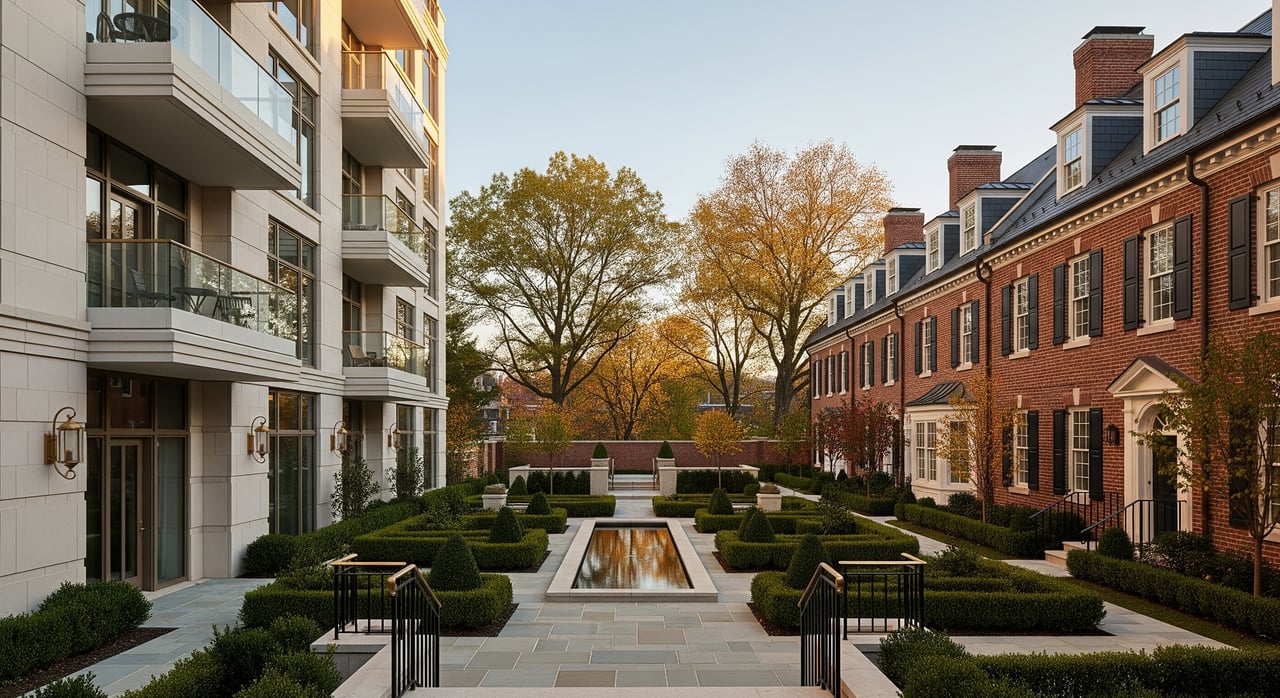
McLean’s mix of older mid‑century towers, newer luxury high‑rises, and managed townhome and single‑family communities creates a wide fee range. Local drivers include high contractor costs, amenity levels, structured parking, building age, and master association layers.
- High‑end luxury high‑rise condos with full amenities and garages commonly run $500 to $1,200+ per month. Top‑tier properties with extensive amenities can exceed $1,200.
- Mid‑range condos, including garden or mid‑rise buildings with some amenities, are often $250 to $600 per month.
- Attached townhomes vary:
- If the association covers exterior elements or utilities: $200 to $450 per month.
- If it covers only common areas: $75 to $250 per month.
- Single‑family homes in HOAs typically range $25 to $200 per month, often billed quarterly or annually. Many fall under $100 per month.
- Master association fees, when present, can add $25 to $200+ per month, depending on shared amenities and services.
Always verify current figures in the listing and the association budget. The exact coverage and building profile matter more than the property type label.
Reserves and special assessments
Reserves are the association’s savings account for major repairs. A professional reserve study lists building components, expected life, and recommended funding levels. Many communities update their study every 3 to 5 years and include a reserve contribution line in the annual budget.
Special assessments are one‑time charges when reserves and operating funds cannot cover a project. Common triggers include roof replacements, garage repairs, elevator overhauls, façade work, or emergency structural fixes. Older buildings or communities with deferred maintenance are more likely to levy them. Check the last 12 to 24 months of meeting minutes and the budget notes for any planned work.
Litigation matters too. Ongoing lawsuits can increase operating costs or lead to assessments, especially if structural issues are involved. Review disclosures and minutes for any pending cases.
Townhomes: why they vary so much
Two townhomes a few blocks apart can have very different monthly costs. If the association maintains the roof and exterior, dues will be higher, but your personal out‑of‑pocket maintenance is reduced. If the association covers only landscaping and snow removal, dues will likely be lower, but you will shoulder exterior repairs. Read the declaration to confirm what you own and what the association maintains.
How fees affect your mortgage and approval
Your lender includes HOA or condo dues when calculating your debt‑to‑income ratio, which impacts how much you can borrow. When condo dues include utilities or services, the underwriter may ask for documentation on what is covered. If you are using FHA or VA financing, confirm whether the condo project is approved for that loan type since owner‑occupancy, reserves, or litigation can affect approval status.
The bottom line: treat monthly fees as part of the total cost of ownership. A lower purchase price with high fees can be more expensive over time than a higher purchase price with modest dues.
Buyer due‑diligence checklist
Before you make an offer, ask for and review:
- Current year budget and the last 2 to 3 years of financials
- The most recent reserve study and whether reserves are funded to plan
- Current reserve balance and any schedule of capital projects
- Meeting minutes for the last 12 to 24 months
- Any pending or recently passed special assessments, with amounts and timelines
- Current dues, billing frequency, late fees, and collections policy
- Insurance certificate showing master policy coverage and deductibles
- CC&Rs, declaration, bylaws, and house rules
- Management contract terms and fees
- Estoppel letter at contract to confirm account status
- Litigation disclosures
Questions to ask the seller or manager:
- How often have special assessments occurred, and for what projects?
- Are any large projects planned in the next 3 to 5 years? How will they be funded?
- Who manages the community, and how long have they served the property?
- What percentage of units are rented, and do rental caps exist?
For larger or older buildings, consider an independent engineering inspection or request more detailed building reports, especially where garages, balconies, or structural repairs are common.
Red flags to approach with caution
- Low or zero reserves plus meeting notes that mention deferred maintenance
- Recent or frequent large special assessments
- Ongoing litigation, especially involving structure or safety
- High rental percentages that may affect financing and wear on common areas
- Frequent management turnover or lack of professional management in large properties
- Unclear insurance coverage or very high master policy deductibles
Negotiation tips that protect your budget
- Price for upcoming capital needs. If the reserve study shows major work soon, factor that into your offer.
- Address assessments directly. Ask the seller to cover or escrow for any scheduled special assessment that has been approved but not yet paid.
- Seek a credit for low reserves. If the association funds below the reserve study’s plan, request a price concession to offset future risk.
- Clarify coverage early. Confirm insurance deductibles, included utilities, and amenity costs so your lender can underwrite without delays.
The McLean advantage when you plan ahead
McLean offers a broad spectrum of lifestyles, from full‑service high‑rises near Tysons to quiet single‑family enclaves with modest dues. When you understand how fees are structured, what they cover, and how reserves are funded, you can choose the property that best fits your life and long‑term plans. A careful document review, paired with clear expectations on budgets and assessments, protects your monthly cash flow and your future resale value.
When you are ready to compare specific communities or review association documents, connect with a local advisor who understands how construction details, amenities, and governance translate into real costs. If you want tailored guidance and a clear plan, reach out to Maria Park for a private consultation.
FAQs
What do HOA and condo fees cover in McLean?
- Fees typically cover common‑area maintenance, management, insurance on shared elements, reserves, and amenities, with condos often including more building systems and some utilities.
How much are luxury high‑rise condo fees in McLean?
- Full‑service high‑rises commonly range from $500 to $1,200+ per month, depending on amenities, building age, and whether garages and 24/7 services are included.
What is a special assessment and how can I spot one before buying?
- A special assessment is a one‑time charge for capital projects when reserves fall short; check budgets, minutes from the last 12 to 24 months, and disclosures for any approved or proposed assessments.
How do HOA or condo fees affect my mortgage approval?
- Lenders include dues in your debt‑to‑income ratio and may request details on what dues cover; condo project approval may be required for FHA or VA loans.
Which documents should I review before making an offer?
- Ask for the current budget, recent financials, reserve study and balance, meeting minutes, rules and CC&Rs, insurance certificate, management contract, estoppel letter, and litigation disclosures.
Why do townhome HOA fees vary more than single‑family?
- Some townhome associations cover roofs and exteriors, while others cover only common areas; the scope of maintenance responsibility drives the monthly cost.