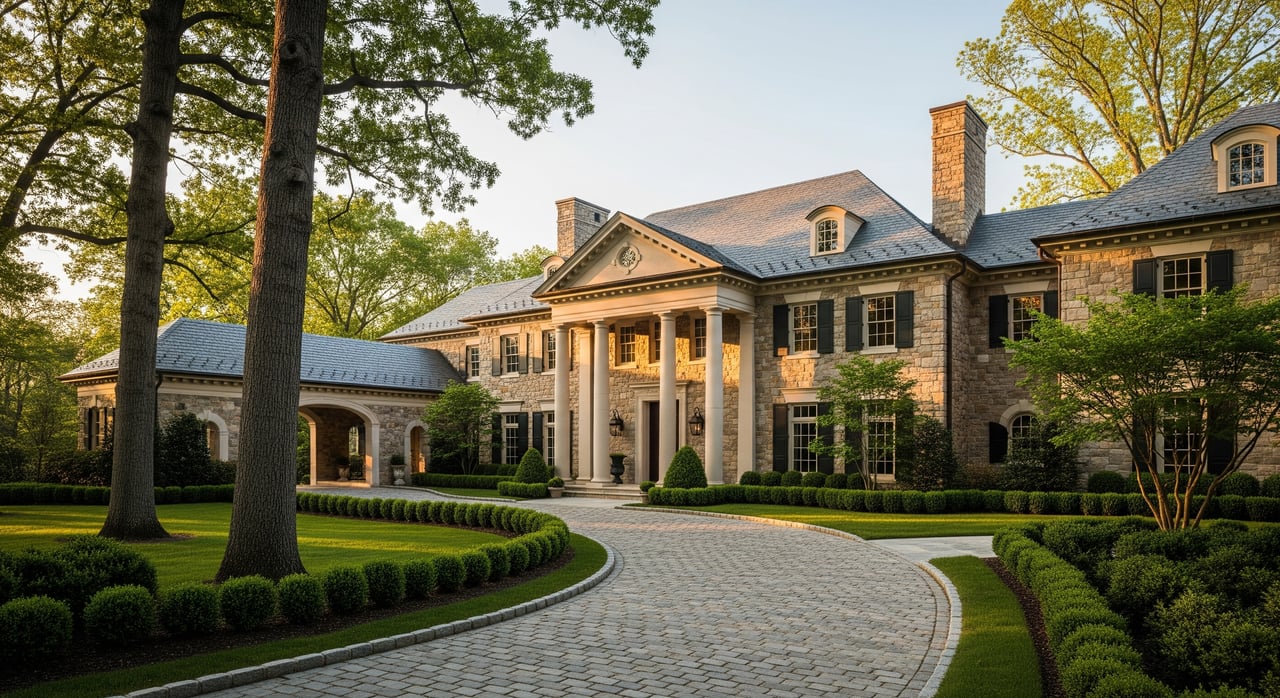
Staring at price per square foot and wondering why two McLean luxury homes with similar sizes are priced so differently? You are not alone. In high‑end neighborhoods near D.C., PPSF can shift more on land, location, and quality than on square footage. In this guide, you will learn what PPSF truly measures, why it varies across McLean, and how to use it as a smart context tool alongside real comparables. Let’s dive in.
Price per square foot, defined
Price per square foot is the sale price divided by a chosen square footage number. The key is the base you choose. If you change the square footage used, you change the result.
Common ways to measure square footage include:
- Above‑grade finished living area. This is the most common base for single‑family comparisons and is often the cleanest for McLean luxury homes.
- Gross living area (GLA). Often used like above‑grade finished area, but definitions can vary by source.
- Total finished area. Includes finished basements and finished attics. This can distort cross‑property comparisons because buyers and appraisers often value below‑grade space differently.
- Usable or adjusted square footage. Excludes non‑habitable areas like unfinished basements and garages.
Professionals often rely on the ANSI Z765 measurement standard for consistency. MLS entries, county tax records, and past seller materials may not match ANSI or each other. Always note which base you are using and verify square footage with floor plans, an appraiser report, or a professional measurement service when precision matters.
Why PPSF varies in McLean
Location and micro markets
Proximity to D.C. and key commuting routes can move PPSF meaningfully. Homes near the Capital Beltway, Chain Bridge, or the George Washington Parkway often command higher PPSF due to commute efficiency and neighborhood prestige.
Within McLean, micro markets behave differently. River‑adjacent corridors and large‑estate stretches along areas like Georgetown Pike reflect high land value and privacy, which elevate PPSF. Downtown McLean and Tysons‑adjacent pockets often see higher above‑grade PPSF on smaller lots with strong access to retail and transit. Newer high‑end rebuilds may show higher PPSF than nearby older estates due to modern layouts and finishes. School attendance zones can influence demand and therefore pricing, so compare within the same assignment area when possible.
Lot size and land value
In luxury segments, a large share of total value may be land, not house. A substantial estate on several acres can show a lower PPSF even if the total price is very high. By contrast, a new infill home on a small lot may post a high PPSF because land near amenities is scarce.
The takeaway: PPSF can hide true land value. Always compare lot size, usable yard, and setting alongside the per‑foot number.
Year built, renovations, and function
New construction and fully renovated homes tend to command higher PPSF. Buyers pay for efficient layouts, taller ceilings, updated systems, and designer finishes. Older estates that are not modernized often show lower PPSF even on exceptional lots.
Layout also matters. Functional obsolescence, such as small rooms or dated mechanicals, can pull PPSF down despite large total square footage.
Build quality and finishes
Materials and craftsmanship drive premiums. Natural stone, custom millwork, custom steel or wood windows, designer kitchens, high‑end elevators, and integrated smart systems push PPSF up relative to more standard builds. Custom architecture often outperforms tract‑style luxury at the same size.
Amenities and accessory structures
Pools, guest houses, in‑law suites, outdoor kitchens, tennis courts, extensive landscaping, and similar features add value in ways that do not neatly map to square footage. Including finished basements in the square footage will lower PPSF, but most buyers and appraisers still weight above‑grade area more heavily.
View, privacy, and topography
River views, treed ridgelines, elevated sites, and privacy created by mature landscaping often command premiums. These location traits can shift PPSF even when homes have similar sizes.
Market timing
PPSF reflects market conditions. In a rising market, PPSF can move quickly over a few months. In a softening period, it can pull back just as fast. Use recent data in fast markets and be clear about your time window.
How to compute and interpret PPSF
Choose the right square footage base
For McLean single‑family luxury, the most reliable base is above‑grade finished living area measured consistently. If you include basements, present two numbers: PPSF based on above‑grade area and PPSF based on total finished area. Label them clearly so you can compare apples to apples.
Select true comparable sales
Pick comps that match the property type and submarket. Keep your search tight on location. Within McLean, prioritize the same block or neighborhood if possible and compare like with like.
Use these core criteria:
- Property type: detached luxury single‑family compared only to detached.
- Location: same neighborhood or a short drive with similar feel and access.
- Lot size band: compare within similar bands, such as less than 0.5 acre, 0.5 to 1.5 acres, and more than 1.5 acres.
- Age and renovation level: similar era or clearly adjusted for level of updates.
- Functional layout: bedroom and bathroom counts, and key features like a main‑level suite if relevant.
- Sale date: ideally within 3 to 6 months in active conditions. In thin luxury segments, you may need up to 12 months, then account for market changes.
Exclude non‑arm’s‑length sales and atypical terms unless they are the only available evidence, and then flag them for context.
Adjust comps with context
Adjustments should guide you rather than define a hard number. Consider these common factors when you compare PPSF across comp sets:
- Lot size and usable yard: larger or more private lots often merit a premium.
- Finished basement and lower level amenities: add value, but usually at a lower per‑foot weight than above‑grade space.
- Outdoor features: pool, outdoor kitchen, tennis court, guest cottage, and extensive landscaping can add a material premium.
- Renovations and finishes: high‑end upgrades and modern systems can justify higher PPSF.
- Condition or functional issues: dated systems or awkward layouts can reduce PPSF.
When PPSF misleads
- Mixing measurement bases, like comparing an above‑grade PPSF with a total‑finished PPSF.
- Comparing a large‑acreage estate to a small‑lot infill home without adjusting for land.
- Blending custom one‑off builds with production‑style luxury without quality adjustments.
- Relying on a tiny sample size that lets one sale skew the average.
- Using sales with unique conditions, such as court‑ordered transactions, without context.
Pair PPSF with smart analytics
PPSF is most useful when paired with other metrics. For a clear picture, look at:
- Median sale price and the spread of prices so an outlier does not control your view.
- PPSF distribution within your exact submarket and lot band to set a realistic range.
- A scatterplot of sale price versus above‑grade square feet, labeled by lot size or year built, to see if land and amenities are driving value.
- Rolling 3‑ or 6‑month PPSF trends to gauge momentum.
- Days on market and sale‑to‑list ratio to see how pricing interacts with demand.
Quick step‑by‑step checklist
Verify above‑grade square footage, using ANSI measurements when available or a professional measurement service.
Pull 4 to 6 comparable sales within the same neighborhood and lot size band.
Note renovation level, finishes, amenities, and functional layout. Adjust with judgment for each factor.
Report two numbers when relevant: PPSF based on above‑grade area and PPSF based on total finished area. Label your time window.
Consult your agent and, for formal valuation, an appraiser. Use PPSF as context, not as the final answer.
For buyers: use PPSF wisely
Use PPSF to screen and rank options quickly, then dig deeper. Confirm measurement bases and compare within the same micro market and lot band. Weigh commute routes, privacy, construction quality, and major amenities. A slightly higher PPSF can be a better long‑term value if it buys a premium lot, a modern layout, or lower future renovation costs.
For sellers: positioning and pricing
Start with accurate measurements and clearly state your PPSF base. Benchmark against comparable sales in your immediate micro market. Highlight the features that PPSF does not capture well, like land, privacy, outdoor living, designer finishes, and recent mechanical upgrades.
Never reduce reported square footage to inflate PPSF. That can mislead buyers and create appraisal or financing issues. Instead, price within a tight range supported by comps and present a clear case for quality and amenities.
How Maria Park can help
In McLean’s luxury segment, pricing and presentation benefit from both construction insight and local data. You get both. With builder‑side sales experience, strong relationships across Northern Virginia, and a boutique approach backed by national‑level marketing, you receive guidance that aligns measurement standards, comps, and quality signals to support your goals. From pre‑market measurement and finish consultation to comp selection and negotiation strategy, you get a calm, data‑minded partner who speaks both luxury and construction.
If you are planning a sale or narrowing a purchase, connect for a confidential strategy session with Maria Park. We will map the right PPSF context, align on true comps, and chart a smooth path to your next move.
FAQs
Is PPSF the best way to price a McLean luxury home?
- No; it is a useful comparison tool, but land, location, condition, and unique amenities often drive value, so you should pair PPSF with true comps and qualitative adjustments.
How recent should comparable sales be in McLean’s luxury market?
- Aim for 3 to 6 months in active conditions; if turnover is limited, use 6 to 12 months and account for market changes over time.
Should a seller report less square footage to raise PPSF?
- No; manipulating square footage can mislead buyers and create appraisal issues; use accurate, verifiable measurements and explain quality and amenity premiums instead.
How should basements and accessory units factor into PPSF?
- Show two numbers: PPSF for above‑grade area and PPSF for total finished area, and note that above‑grade space is typically weighted more by buyers and appraisers.
If two homes have similar PPSF, which is the better value?
- It depends on land, condition, layout, renovations, and future potential; PPSF equalization can hide major differences, so verify details before deciding.
Do school assignments affect PPSF in McLean?
- School attendance zones can influence demand and pricing; compare within the same assignment area and verify boundaries during your search.
Why do river‑adjacent and Tysons‑area homes show different PPSF?
- River‑adjacent estates reflect higher land and privacy value, while Tysons‑adjacent areas often show higher above‑grade PPSF on smaller lots due to access and convenience.