If you are shopping for a new build in McLean, “luxury” means more than square footage and a long list of upgrades. In a market where home values sit far above the Fairfax County median, buyers tend to expect a home that feels finished, functional, and thoughtfully designed from day one. The good news is that today’s strongest new builds are moving in that direction, and knowing what matters most can help you spot real value. Let’s dive in.
McLean buyers expect more than a pretty finish
McLean sits at a premium price point within Fairfax County. Fairfax County’s January 2024 report shows a median market value of $1,184,537 in the McLean planning district, compared with $708,383 countywide.
That context shapes buyer expectations. When you are buying at this level, you are often not looking for a project. National buyer research shows many new-construction buyers choose new homes to avoid renovations or plumbing and electrical issues, while others want the ability to personalize design features.
In practical terms, that means a successful McLean new build usually needs to deliver comfort, customization, and confidence. Buyers want a home that looks polished, lives well every day, and reflects current standards for energy performance and construction quality.
Kitchen-centered layouts lead the wish list
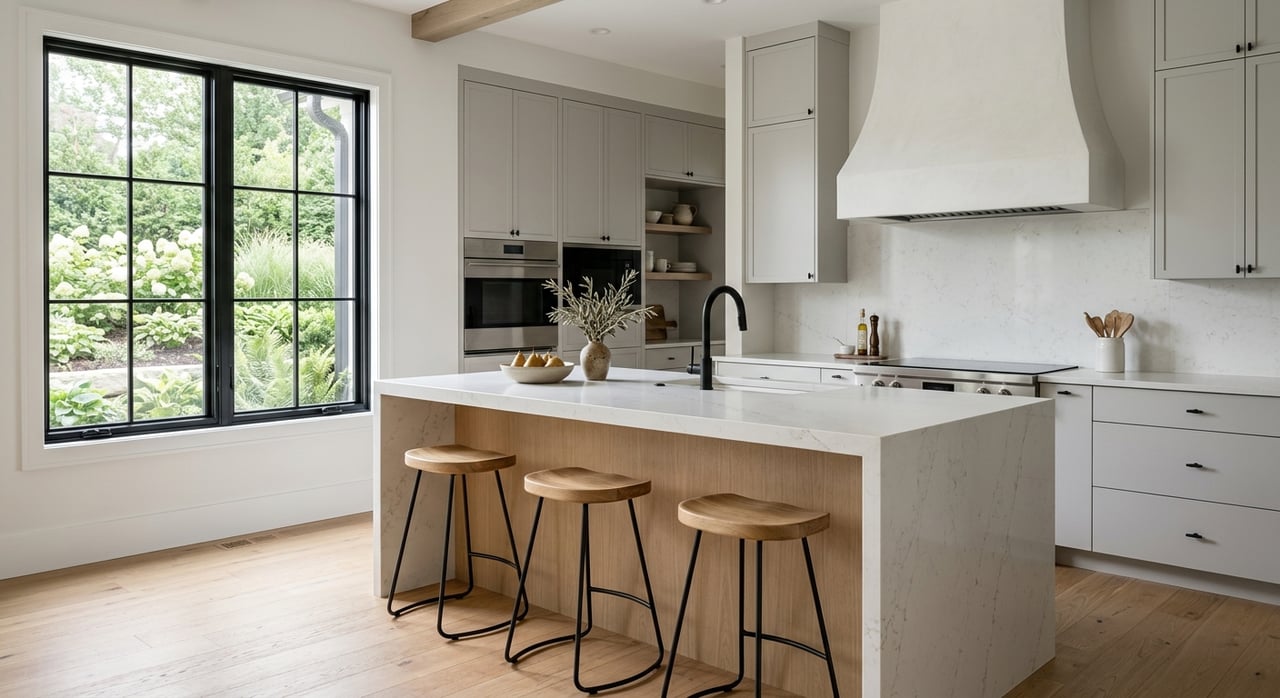
For many buyers, the kitchen is still the emotional and functional center of the home. It is where daily routines happen, where guests gather, and where a new build either feels thoughtfully planned or surprisingly disconnected.
Buyer preference data makes this clear. A large majority of buyers want the kitchen open to the dining room and family room, and many also want the dining room open to the family room. In McLean, that translates into an expectation that the main level feels connected, easy to move through, and ready for both casual living and entertaining.
Open flow is the baseline
An open layout is no longer a bonus feature in the luxury new-build space. It is closer to a baseline expectation. If sightlines are awkward or rooms feel boxed in, buyers may question whether the home truly fits modern living.
At the same time, open does not mean empty. The best layouts still give each area a purpose, with enough definition for dining, lounging, and conversation without losing the sense of flow.
The kitchen needs to feel substantial
Today’s buyers often expect more than attractive countertops and a stylish hood. Research points to strong demand for features like a double sink, walk-in pantry, table space for eating, a central island, and water filtration.
Island size matters too. Houzz reports that 42% of homeowners choose islands 7 feet or longer, which reflects a preference for kitchens that can handle prep, serving, and everyday gathering all at once. In luxury new builds, a small island or limited storage can feel out of step with the rest of the home.
Personalization matters more than showroom sameness
One clear trend in luxury housing is the shift away from generic finish packages. Houzz research shows strong interest in transitional styling, with traditional style also gaining renewed traction. NAHB research also points to growing value placed on personalization, authenticity, higher-quality cabinetry, and more premium flooring choices.
For you as a buyer, that means the strongest new builds often feel warm and layered rather than overly stark. Think custom-feeling details, quality materials, and finish selections that feel timeless instead of trend-chasing.
Support spaces carry real weight
Luxury buyers are not judging the home only by the main entertaining areas. They are also looking at how the house supports real life behind the scenes.
NAHB ranks the laundry room among the most-wanted features, and buyer demand remains strong for spaces like the dining room, great room, home office, and separate living room. If you work from home even part of the week, this is especially relevant. More than 70% of buyers who want a home office want at least 100 square feet.
Main-level flexibility stands out
A full bath on the main level consistently ranks high in buyer preferences. This feature can support guests, long-term flexibility, and easier day-to-day function without calling attention to itself.
In a McLean luxury home, buyers often expect spaces that work well now and can still work well later. That kind of practical planning tends to add lasting appeal.
Primary suites are expected to feel private and restorative
In many new luxury homes, the primary suite has evolved beyond a simple bedroom-and-bath setup. Buyers increasingly want it to feel like a retreat within the home.
Houzz’s 2025 bathroom study shows a notable share of homeowners adding wellness-oriented bathroom features, including upgraded lighting, soaking tubs or spa baths, and water features. Wet rooms are also becoming more common.
Bath design should balance luxury and ease
A beautiful bath is important, but so is usability. Buyer preference research points to interest in wider doorways, wider hallways, non-slip flooring, and step-free access. These are practical features that can improve comfort without changing the overall luxury feel.
For McLean buyers, the strongest primary baths tend to combine generous showers, excellent lighting, strong storage, and easy circulation. The result feels elevated, but also sensible for long-term living.
Storage and layout still matter
Even in high-end homes, a primary suite can miss the mark if storage feels limited or the layout feels cramped. Buyers tend to notice whether vanities offer enough space, whether closets feel well-planned, and whether the bath supports a smooth morning routine.
That is why layout often matters just as much as the finish palette. A suite can look impressive in photos, but if it does not function well, buyers will feel the difference quickly.
Outdoor living should feel like usable living space
In McLean, outdoor areas are no longer treated as leftover square footage. Buyers increasingly expect them to function like an extension of the home.
Houzz found that many homeowners upgrade outdoor areas specifically to extend living space, with outdoor entertaining ranking high among younger buyer groups. In higher price categories, demand also rises for outdoor kitchens, fireplaces, and built-in grills.
Buyers want comfort, not just curb appeal
A basic patio and grass yard may not feel enough in the luxury segment. Strong outdoor spaces often include comfortable seating areas, layered lighting, shade or screening elements, and room to host people with ease.
Design coverage from Houzz also points to growing interest in porches with fireplaces, TVs, screens, ceiling fans, and heaters. The broader takeaway is simple: buyers want outdoor areas they will actually use across more of the year.
Lighting and landscaping shape the experience
Outdoor lighting and planting plans do a lot of heavy lifting. Houzz reports that outdoor lighting is one of the most common upgrades, especially landscape lighting, and that many homeowners also invest in plants, shrubs, and trees.
In a market like McLean, that supports a higher expectation for privacy, atmosphere, and finished presentation. Buyers are often looking for outdoor spaces that feel layered and intentional, not bare-minimum.
Energy performance and smart features are part of luxury
Luxury today is not just visual. It is also about how well a home performs behind the walls.
Fairfax County enforces Virginia’s statewide building code, and the 2021 Uniform Statewide Building Code and 2021 Virginia Energy Conservation Code became effective on January 18, 2024. By January 18, 2025, all applications and plans had to meet the 2021 USBC requirements. For buyers, that makes code awareness part of evaluating a new build’s quality and readiness.
Efficiency carries real value
Buyer preference data shows strong demand for ENERGY STAR windows, ENERGY STAR appliances, efficient lighting, whole-home ENERGY STAR performance, and triple-pane windows. NAHB also found that many buyers would pay more upfront to save meaningfully on annual utility costs.
That matters in McLean because buyers at this price point often expect a home to feel efficient as well as elegant. A house that looks beautiful but underdelivers on comfort or operating costs may feel less compelling over time.
Smart tech should support daily life
The most appealing smart-home features tend to be practical ones. Buyer research points to demand for programmable thermostats, security cameras, video doorbells, wireless security systems, and multi-zone HVAC.
These features are less about novelty and more about ease, security, and control. In a new build, buyers often expect technology that works quietly in the background and makes the home easier to manage.
Finish quality should feel timeless, not flashy
One of the clearest signals in the research is that buyers value quality and personalization more than showy extras for their own sake. That is especially relevant in McLean, where buyers often know the difference between a feature that adds daily value and one that simply sounds expensive.
Houzz’s 2025 kitchen trend coverage points to natural stone, white oak, paneled appliances, range alcoves, porcelain countertops, and transitional or traditional influences. These choices tend to read as warm, tailored, and enduring.
Not every luxury add-on is a must-have
It is also worth noting what buyers are not broadly prioritizing. NAHB’s least-wanted list includes elevators, glass walls, wine cellars, and pet washing stations.
That does not mean those features have no place. It simply means they are better viewed as niche upgrades, not the core ingredients of a home that will appeal to the widest pool of McLean luxury buyers.
What this means if you are buying in McLean
If you are comparing new builds in McLean, the homes with the strongest long-term appeal usually get the basics and the details right at the same time. They offer a kitchen-centered main level, a calm and functional primary suite, outdoor living that feels fully usable, and performance features that support comfort and efficiency.
They also tend to avoid the trap of overbuilding for spectacle. Instead, they focus on flow, finish quality, and practical luxury. In a premium market, that combination often stands out more than sheer size alone.
If you want guidance on evaluating spec homes, pre-construction opportunities, or finish quality in McLean, Maria Park offers a consultative, builder-savvy approach designed for luxury buyers who want clarity at every step.
FAQs
What do McLean luxury buyers want most in new-build kitchens?
- Buyers typically want open layouts, large islands, walk-in pantries, strong storage, and kitchens that connect smoothly to dining and family spaces.
Why is a main-level full bath important in a McLean new build?
- A main-level full bath supports guests, daily convenience, and long-term flexibility, and it consistently ranks as a highly desired feature in buyer preference research.
What makes a primary suite feel luxurious in a McLean new build?
- Buyers often respond to generous showers, upgraded lighting, strong storage, easy circulation, and a layout that feels private, calm, and practical.
Are outdoor kitchens expected in McLean luxury homes?
- They are not required in every home, but outdoor entertaining features such as built-in grills, seating areas, fireplaces, lighting, and covered spaces are increasingly attractive at higher price points.
How important are energy-efficient features in McLean new construction?
- They are very important, with buyer research showing strong interest in efficient windows, appliances, lighting, and overall performance that improves comfort and lowers utility costs.
Which smart-home features matter most to McLean luxury buyers?
- The most broadly appealing features tend to be programmable thermostats, security cameras, video doorbells, wireless security systems, and multi-zone HVAC.