Cold snaps in McLean can do more than sting your cheeks. They can crack irrigation lines, loosen pavers, stain stone, and rust exterior fixtures, especially near I‑495, Route 123, and Route 7 where road‑salt splash is common. If you want your property to look its best in spring and avoid costly repairs, a little planning now goes a long way. In this guide, you’ll learn exactly how to winterize irrigation, protect stone and pavers, and shield exterior metals for our local conditions. Let’s dive in.
Why McLean needs winter‑proofing
Overnight lows in Northern Virginia often dip near or below freezing from November through March. Repeated freeze‑thaw cycles expand water trapped in pipes, stone, and joints, which leads to cracks and spalling.
Homes near major corridors see added exposure to sodium‑chloride road salt and brine used during winter operations. Salt can corrode metal, stain stone, damage concrete, and weaken joint sand. A preventive plan reduces risk and preserves curb appeal.
Winterize irrigation the right way
A proper shutdown prevents cracked pipes, broken heads, and damaged backflow devices. Aim to complete these steps before the first hard freeze.
Timing and controller
- Schedule winterization in late autumn when nighttime lows consistently approach freezing.
- Turn the controller to OFF or a non‑watering mode. If you use sensors, set them to rain mode or uninstall per instructions.
- Shut off the irrigation water at the main irrigation shutoff if separate from the house supply.
Drain and blow out lines
- Open manual low‑point drains where they exist to remove standing water.
- Use compressed air to evacuate lateral lines, one zone at a time, until no visible water emerges from the heads. Many residential systems operate safely at modest blowout pressures, commonly in the 40 to 60 psi range, but always follow your manufacturer’s limits.
- Use brief bursts rather than continuous high pressure to protect components.
- Treat drip systems with care. Many require draining or media removal instead of high‑pressure blowouts. Follow product guidance.
Backflow devices and compliance
- Fairfax Water requires backflow prevention on irrigation. Keep devices accessible for required testing.
- If removal is allowed for your setup, store the device indoors. If not, wrap it with insulating materials or use an insulated or heated enclosure made for backflow protection.
- Insulate exposed valves, meters, and above‑ground pipes. Use weather‑resistant covers and, where suitable, heat tape installed per instructions.
Documentation to request from your vendor
- Service date and technician info, plus proof of license and insurance.
- Photos of controller settings before and after, and of the backflow device and protection measures.
- The air pressure used, zones blown out, and approximate duration per zone.
- Notes on any damaged components and repair recommendations.
- Confirmation of backflow status and plan for spring reinstallation or testing.
Protect hardscape and stone
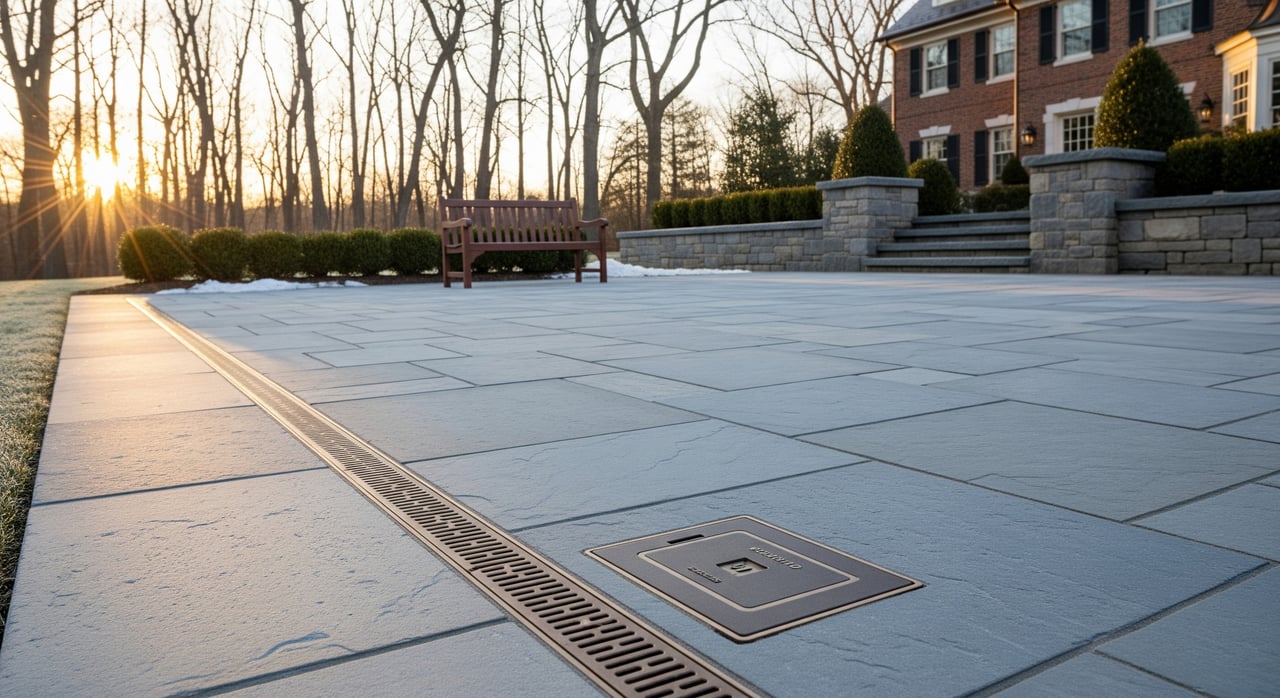
Freeze‑thaw cycles and salt exposure are hard on masonry, concrete, pavers, and joint materials. Focus on keeping water out and salts off sensitive surfaces.
Repair and manage drainage
- Repair cracks, loose stones, and failed mortar in early fall to limit water penetration before freezing weather.
- Ensure patios, walks, and steps slope to shed water. Clear gutters and downspouts so runoff does not saturate areas near hardscapes.
Sealers and joint sand
- Apply breathable, water‑repellent sealers suitable for your material to reduce absorption. Some products may darken the surface, so test first.
- Avoid non‑breathable coatings that trap moisture.
- Refill and compact joints with the right sand. Polymeric sands resist weed growth and shifting, though some products have salt‑exposure caveats. Follow manufacturer guidance.
Minimize salt splash
- Where road salt exposure is likely, consider physical barriers like low curbs or plant buffer strips to reduce direct splash.
- Remove snow promptly by hand or with a snow blower to reduce your reliance on deicers near stone and pavers.
Smarter deicing choices
Not all deicers affect surfaces the same way. Use the least damaging method that meets your safety needs.
- Sodium chloride is inexpensive and common, but it can damage concrete and stone and harm plants.
- Calcium chloride and magnesium chloride melt at lower temperatures and are more effective in cold weather, but they can still be corrosive and tough on landscapes.
- Calcium magnesium acetate is gentler on concrete and plants, but it is costly and less common for residential use.
- Abrasives such as sand or crushed stone add traction without chemical damage. They do not melt ice but reduce slip risk near vulnerable materials.
- Sweep or rinse hardscapes in spring to remove residual salts and protect both surfaces and nearby soils.
Protect exterior metals and lighting
Chloride salts accelerate rust on steel and iron and can degrade coatings on outdoor fixtures.
- Clean and inspect in late fall. Rinse away salt and debris where practical.
- Touch up chips and apply corrosion‑inhibiting primer and a compatible topcoat on vulnerable areas.
- Choose corrosion‑resistant materials where possible, such as stainless steel, aluminum, or hot‑dip galvanized steel for hardware in splash zones.
- Make sure mounts and fasteners drain freely. Avoid crevices that trap salty meltwater.
- Confirm outdoor electrical fixtures are sealed and weatherproof, with protected low‑voltage connections.
Seasonal timeline
- Late summer to early fall:
- Inspect and repair mortar, joints, and cracks.
- Apply breathable sealer if temperatures meet manufacturer minimums.
- Schedule irrigation winterization.
- Mid to late fall:
- Have irrigation professionally drained and blown out.
- Protect backflow devices and insulate exposed piping.
- Clean metal surfaces and apply protective coatings.
- Winter:
- Prioritize mechanical snow removal. Use abrasives near stone and metal where feasible.
- Avoid piling salted snow against stone or plantings.
- Early spring:
- Reactivate irrigation with a full pressure and coverage test.
- Rinse hardscapes to remove salt. Direct runoff away from plant roots.
- Schedule backflow testing per local requirements.
Contractor checklist you can print
Use this concise list with your irrigation or landscape vendor. Ask for photos and a signed copy for your records.
Irrigation winterization
- Controller set to OFF or rain mode; photo provided
- Main irrigation shutoff closed; manual drains opened where present
- Zones blown out; list of zones and duration per zone
- Air pressure used documented and within manufacturer limits
- Drip zones handled per manufacturer guidance
- Backflow device removed, insulated, or enclosed; photos provided
- Exposed valves and piping insulated or wrapped
- Technician name, license, company, and insurance provided
Hardscape and stone
- All cracks and loose joints repaired or repointed
- Breathable sealer applied where appropriate; product and temps noted
- Salt‑exposure areas identified; barrier or buffer recommendations provided
- Deicing materials plan tailored to site
Exterior metals and fixtures
- Salt and debris cleaned from surfaces
- Primer and topcoat applied where needed; products noted
- Hardware and mounts drain freely; ponding issues corrected
Handoff
- Photos attached; any damage and repair recommendations documented
- Suggested spring reactivation date provided
- Warranty or workmanship details included
Spring recovery steps
- Perform a functional test of every zone, noting leaks, low pressure, and misaligned heads.
- Inspect the backflow device for winter damage and schedule required testing.
- Rinse hardscapes to remove residual salts and protect adjacent landscaping.
- Assess plants for salt stress and consult a local landscaper or extension resource for leaching or soil treatment if needed.
Ready your property for resale or peace of mind
Whether you plan to sell this spring or simply want fewer surprises, winter‑proofing protects curb appeal and reduces risk. Done right, it preserves stonework, keeps irrigation reliable, and helps exterior metals last longer. If you need help prioritizing improvements before a listing or want introductions to vetted local pros, connect with Maria Park for tailored guidance and a thoughtful plan.
FAQs
When should McLean homeowners winterize irrigation?
- Aim for late autumn before the first hard freeze, typically as nighttime lows consistently approach freezing.
What air pressure is safe for blowouts on residential systems?
- Many residential PVC systems use modest blowout pressures, often in the 40 to 60 psi range. Follow your manufacturer’s limits.
How do road salts affect stone and pavers in McLean?
- Salt keeps surfaces wet longer, promotes chemical attack on cementitious materials, causes staining and efflorescence, and increases freeze‑thaw damage.
What is the best deicer for sensitive hardscapes?
- Use minimal chemicals and rely on abrasives for traction near stone. If you must melt ice, select products with lower impact and sweep residues in spring.
Do I need a professional for backflow protection?
- Backflow devices are regulated and must remain accessible for testing. A licensed contractor can protect the device without hindering compliance.